mxm-mono-01
Inspired by the Roland SH-101
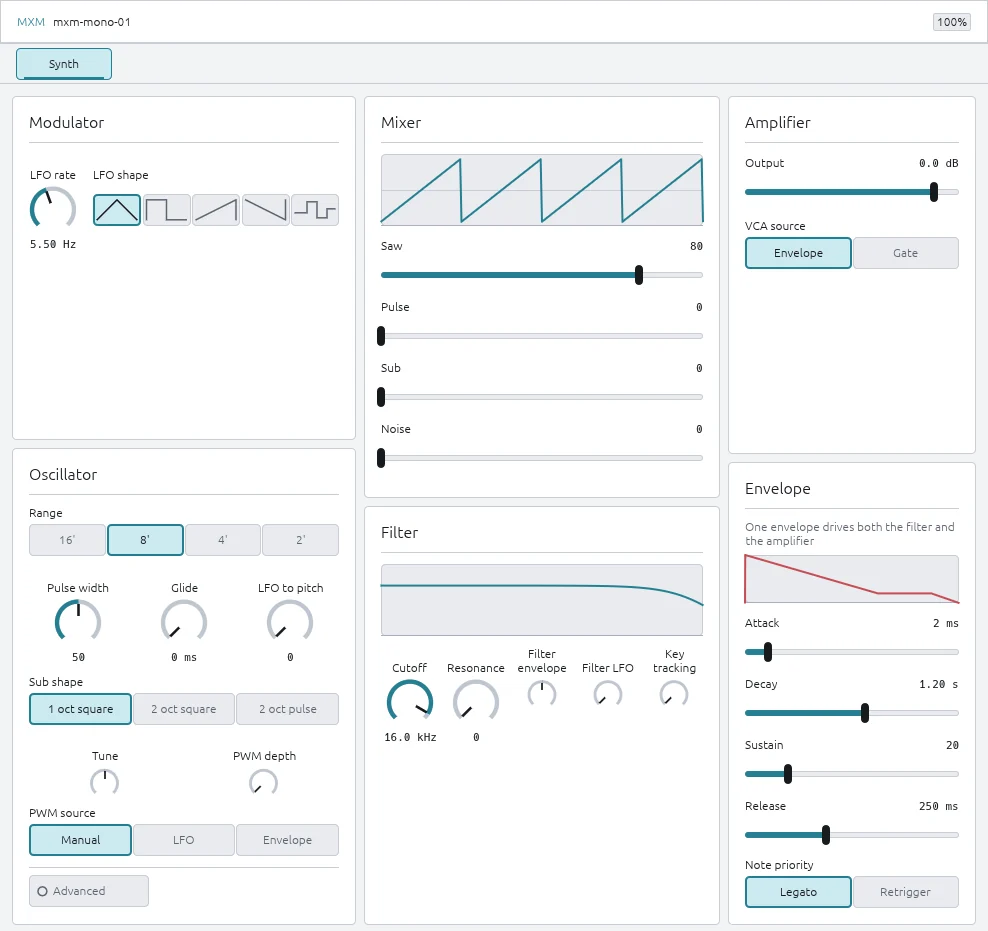
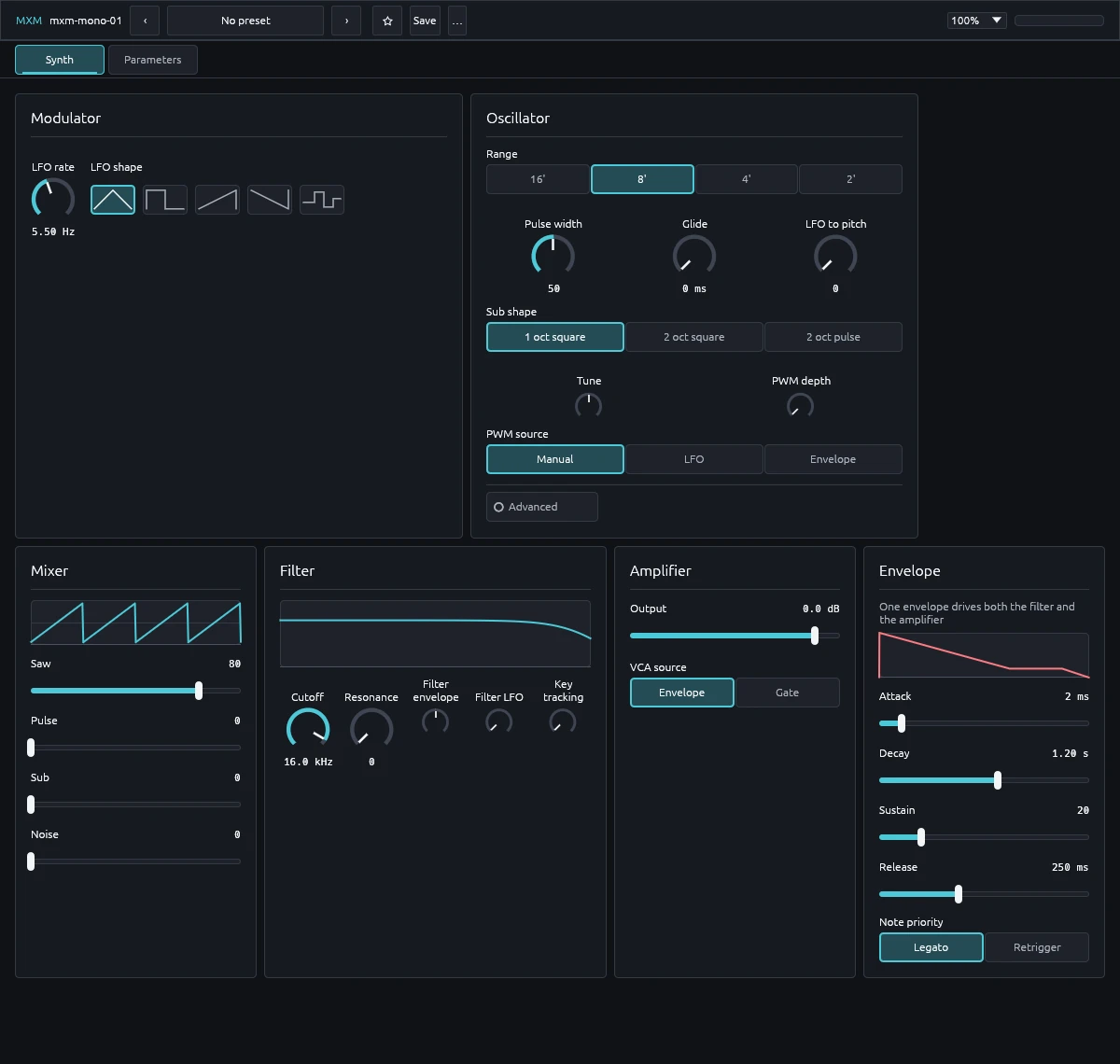
One oscillator, a sub, noise, and a shared envelope. Quick to learn and very easy to get moving.
Meet mxm-mono-01Five synths, each with its own character: a quick one-oscillator mono, a two-oscillator heavyweight, an acid bass, a six-voice poly, and a big semi-modular. They share the same friendly interface, but not the same architecture.
Roland, SH-101, SH-2, TB-303, JUNO-106, and System-100 are trademarks of Roland Corporation. I only use the names to identify the original hardware. MXM is an independent project and is not affiliated with Roland.
Inspired by the Roland SH-101
One oscillator, a sub, noise, and a shared envelope. Quick to learn and very easy to get moving.
Meet mxm-mono-01Inspired by the Roland SH-2
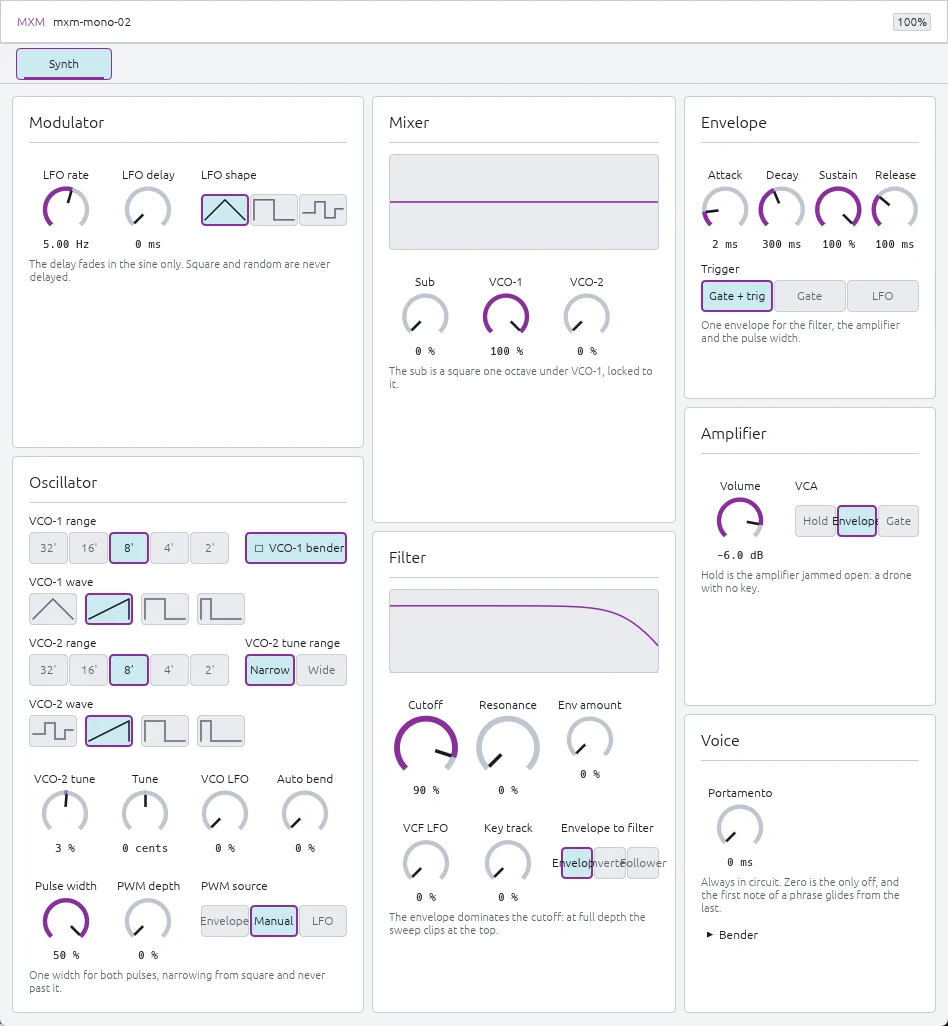
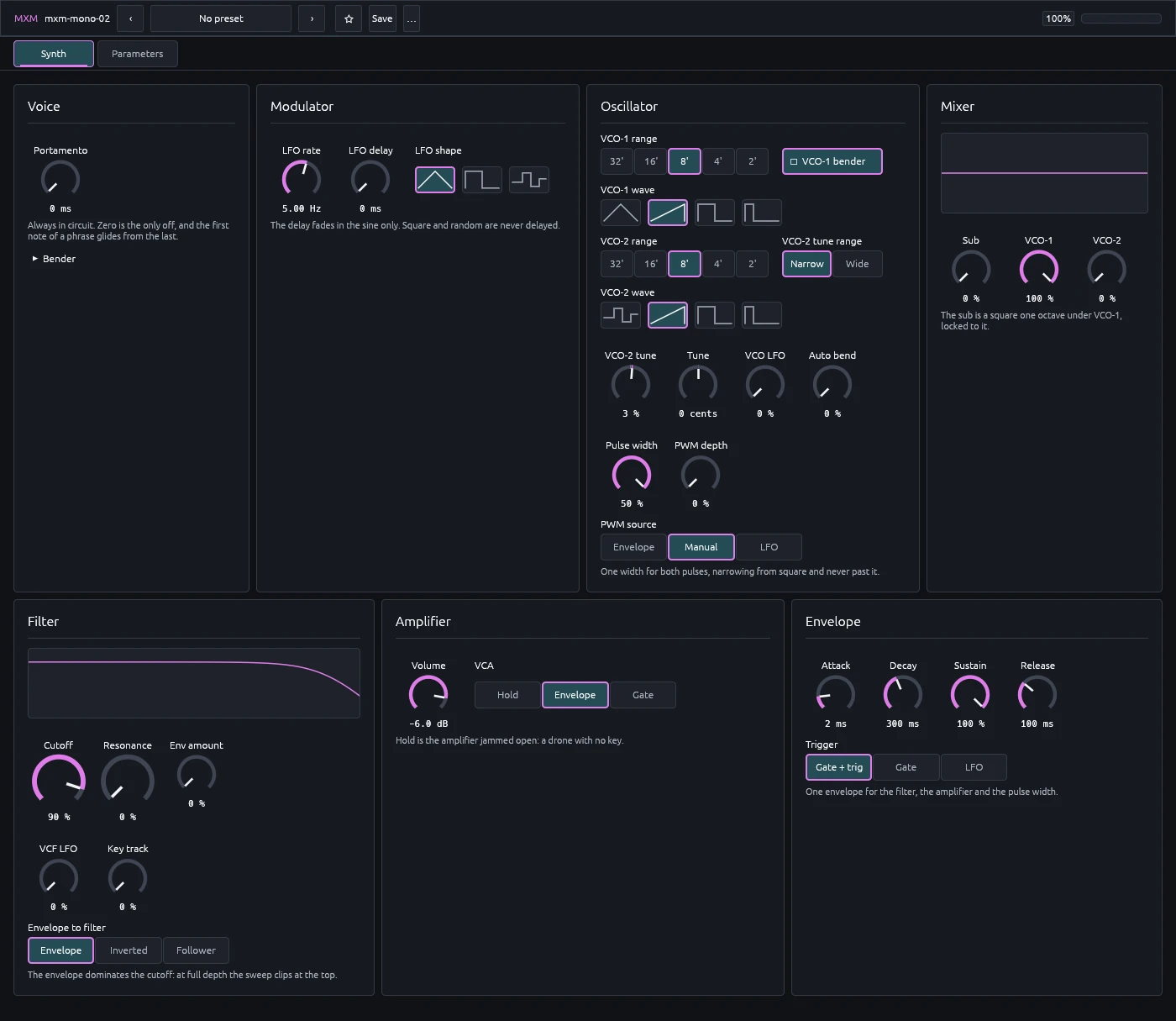
Two free-running oscillators, a locked sub, and one envelope shared by the filter, volume, and pulse width.
Meet mxm-mono-02Inspired by the Roland TB-303
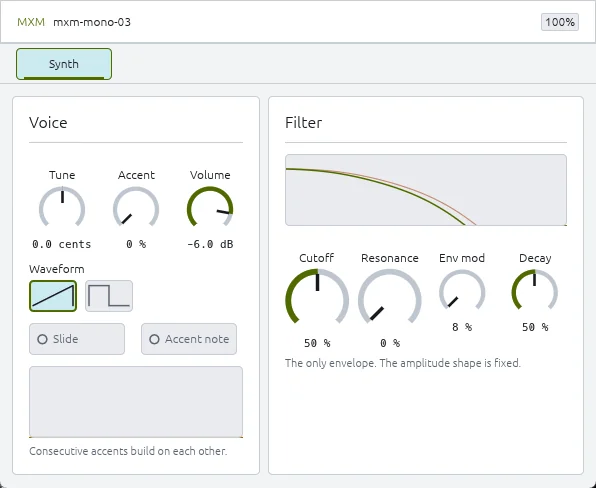
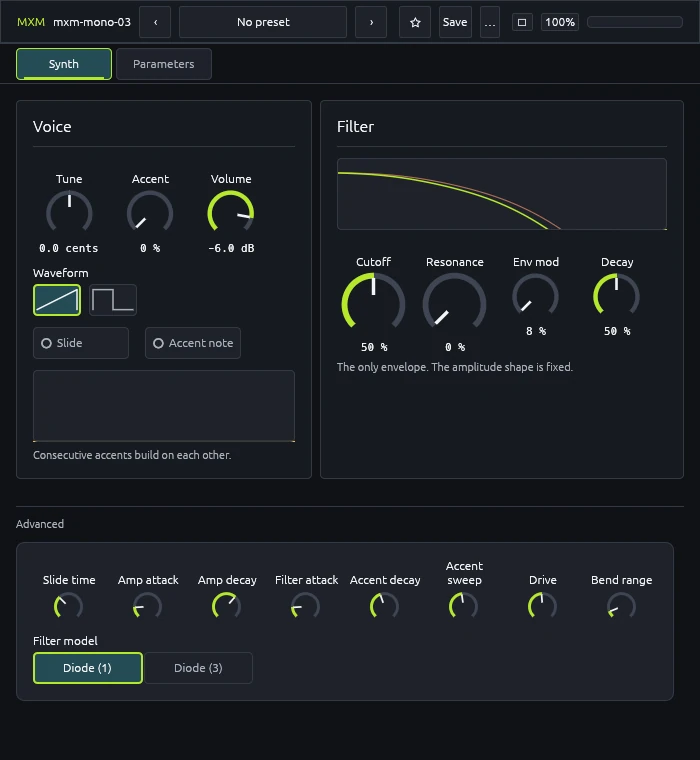
A diode ladder, accents that build across notes, and slide right inside the synth voice.
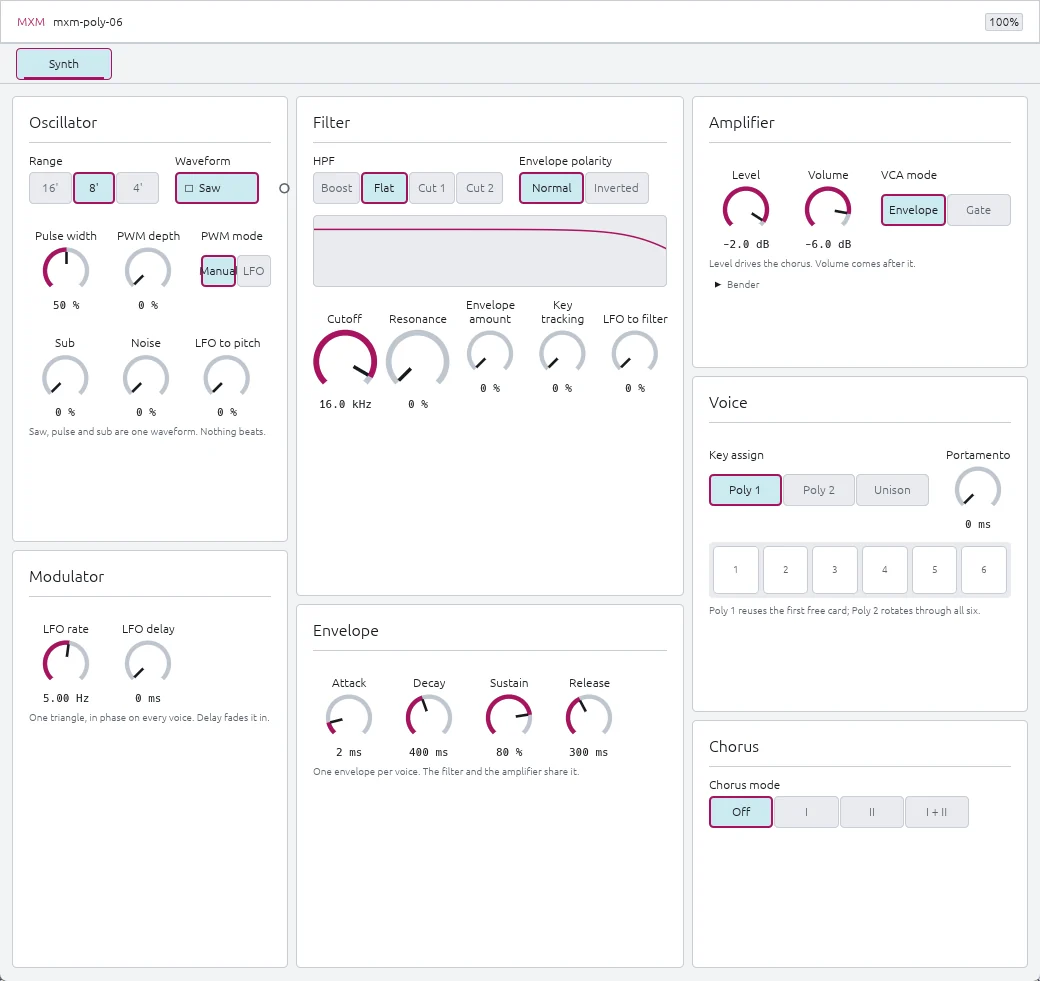
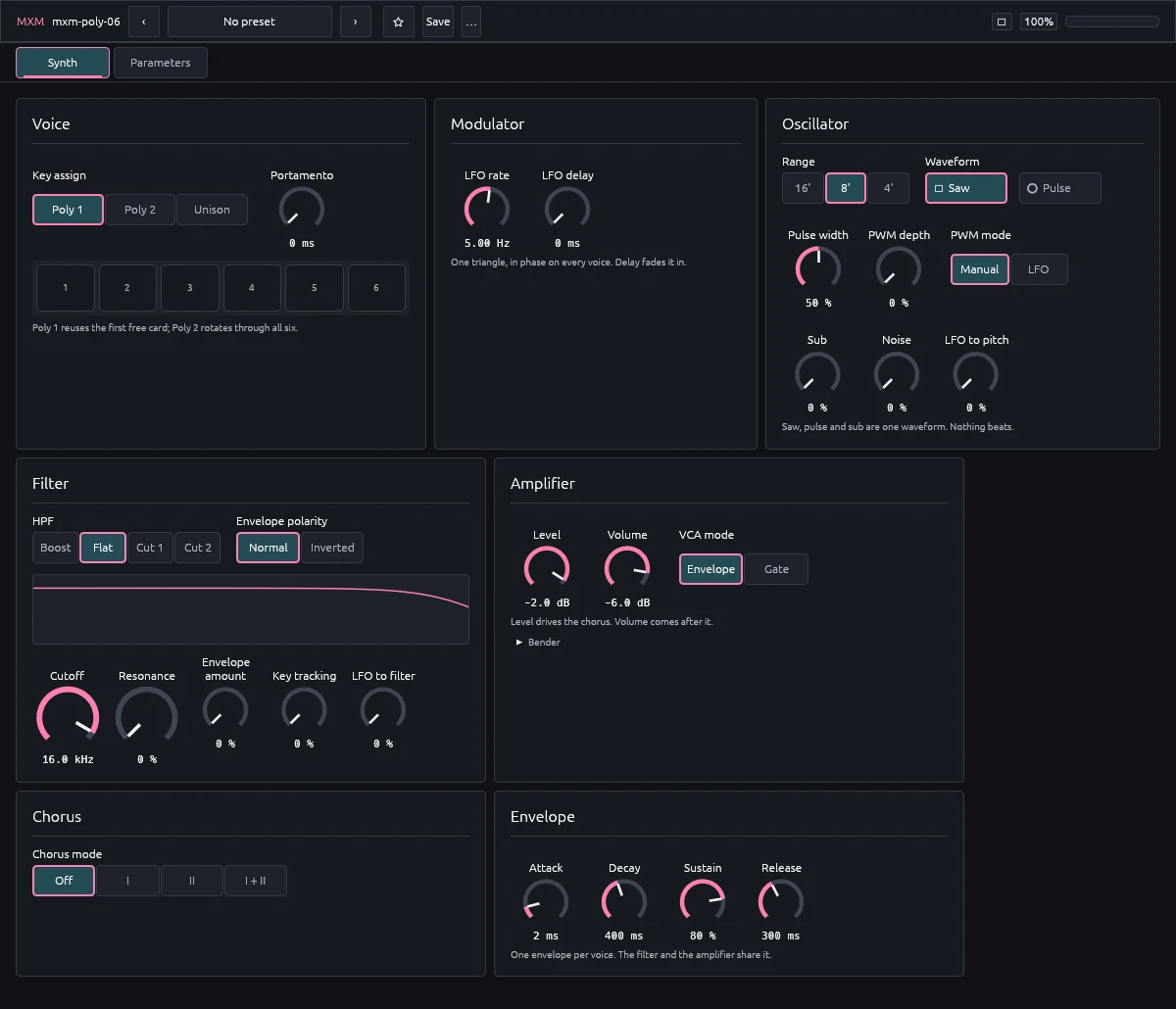
Meet mxm-mono-03Inspired by the Roland JUNO-106
Six clean DCO voices, a bass-boosting high-pass setting, and the chorus that brings it all to life.
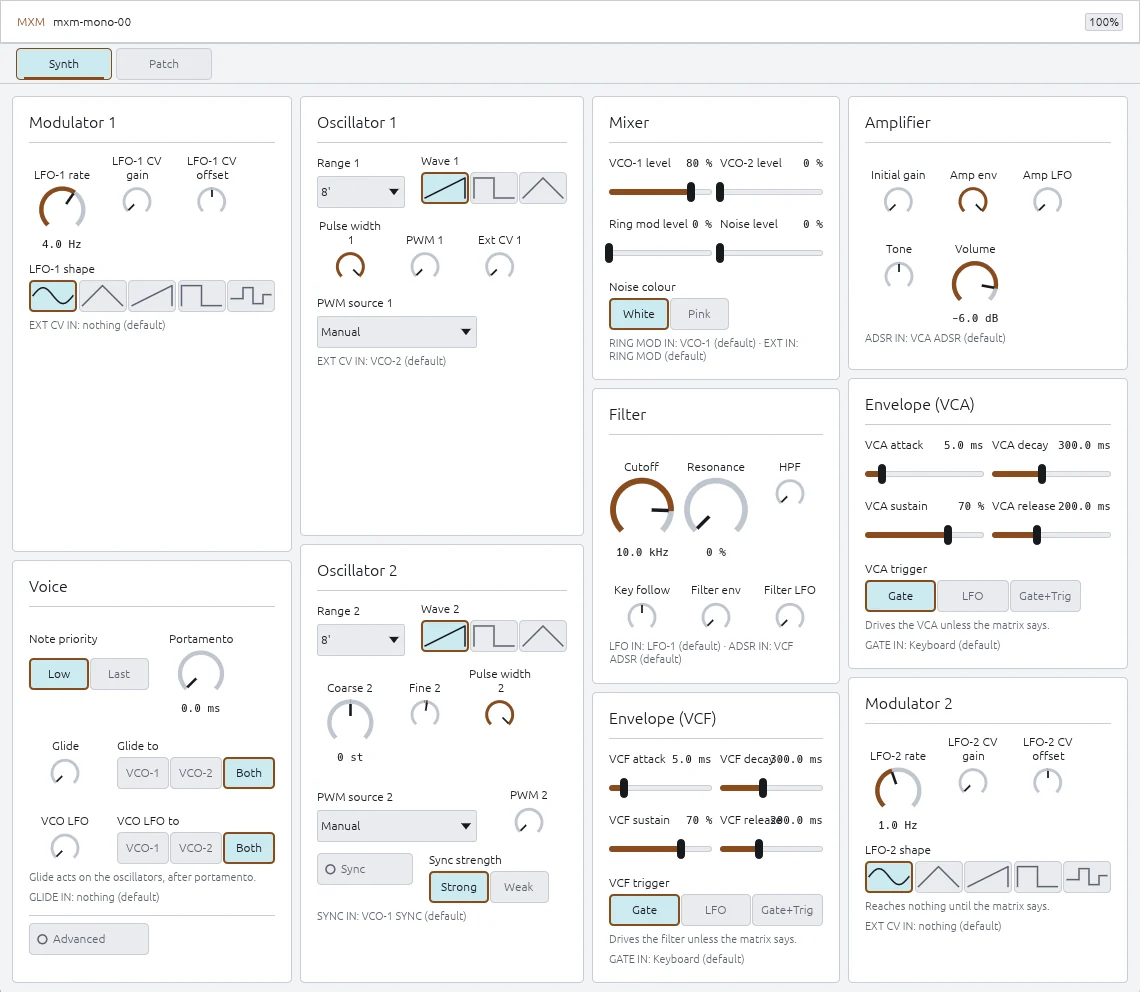
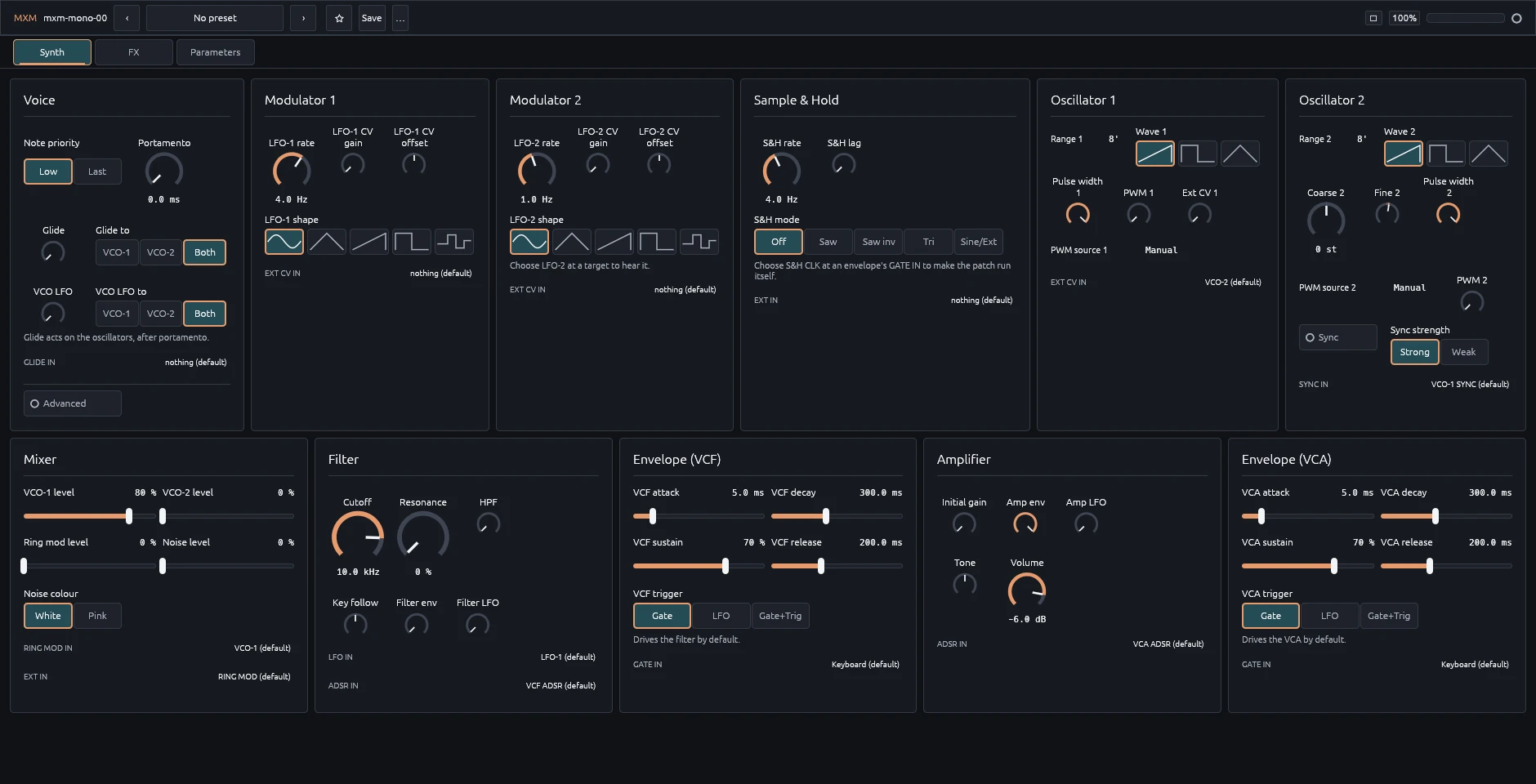
Meet mxm-poly-06Inspired by the Roland System-100
Two oscillators, two envelopes, two LFOs, three effects, and a routing matrix that can make the whole thing play itself.
Meet mxm-mono-00