mxm-chorus-06
Inspired by Roland JUNO-106 chorusIndependent project · not affiliated with Roland Corporation
The chorus from mxm-poly-06, ready for any track.
The effect, presets, editor, and mono/stereo versions are working. Commercial DAW tests are still to come.
Sound
This is the chorus already built into mxm-poly-06, now in its own plugin. Both use the same DSP, so I only have one chorus to keep right.
A triangle wave moves two bucket-brigade delay lines in opposite directions. That little disagreement in timing makes the stereo width. Sum it to mono and the effect folds down neatly.
The JUNO-106 had three switch settings. Here they are presets and exact stops on a continuous Rate knob: One, Two, and Onetwo. You can stay at those familiar speeds or wander well outside them.
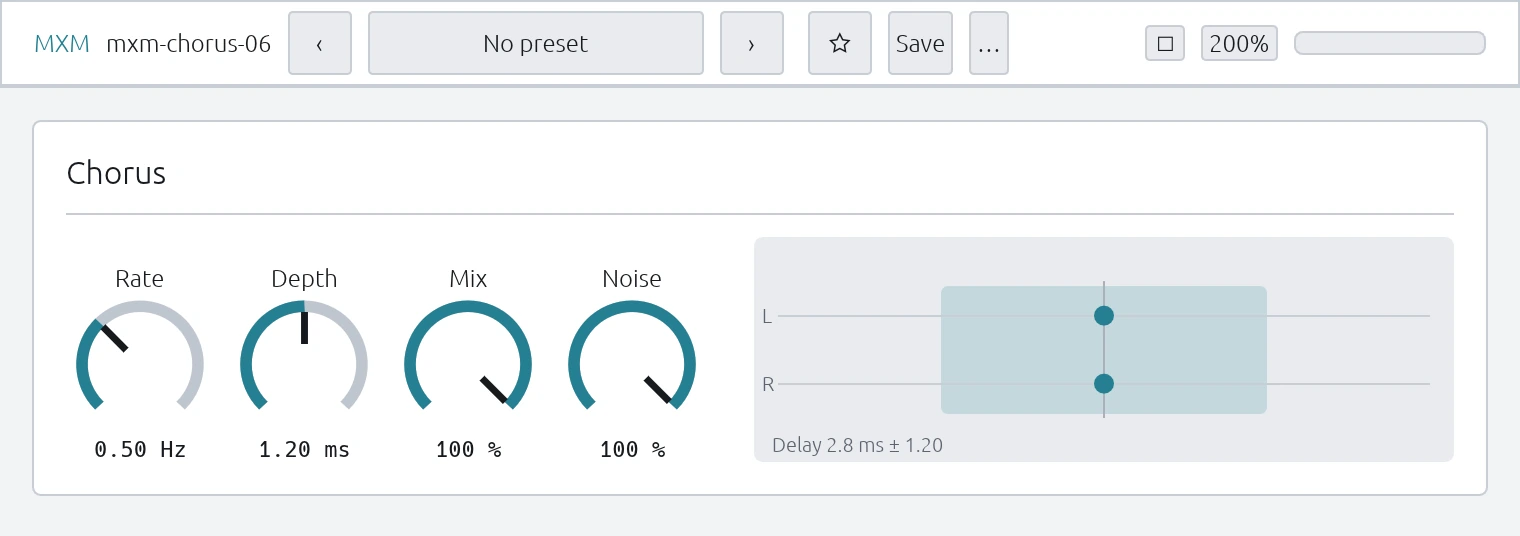
Four knobs
- Rate sets the speed.
- Depth sets how far the delay lines move.
- Mix adds the wet signal while leaving the dry path alone.
- Noise adds the original circuit hiss—or removes it when you want a cleaner track.
Mix at zero switches the chorus off, clears its delay lines, and lets the host put it to sleep.
Interface
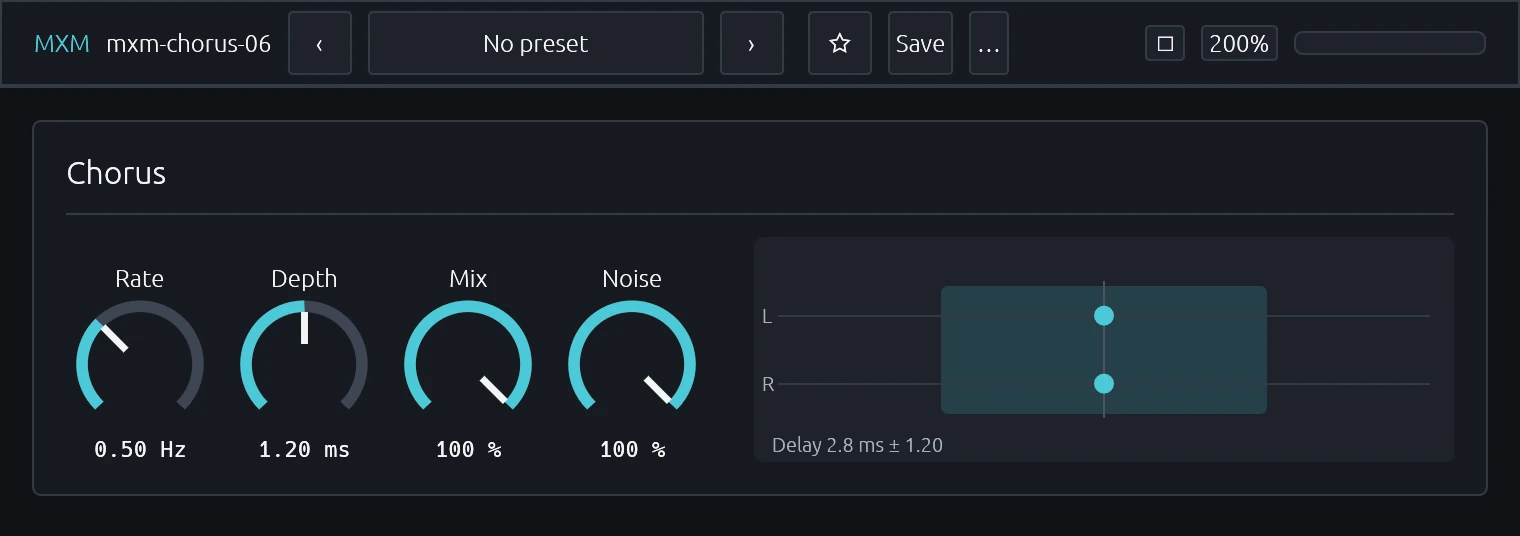
The four knobs sit in one row beside a Sweep display. Two dots show the left and right delays crossing, while the shaded area shows how much range Depth adds.
The display follows the actual audio modulator. At Mix zero, the dots disappear and it simply says Off.
Presets
One, Two, and Onetwo match the original three chorus positions. Init starts at One with the effect on, so you hear something as soon as you add it.
Status
| Current state | |
|---|---|
| Format | CLAP audio effect |
| Audio layouts | Mono to stereo; stereo to stereo |
| Target systems | Windows, macOS, Linux |
| Validation | Project tests and clap-validator pass |
| Commercial DAW | Not tested yet |
| Hardware comparison | Not done yet; it does match the synth’s built-in chorus |
On a stereo track, the effect sums the input to mono before creating a fresh stereo image. At Mix zero, the original left and right channels pass through untouched.
The inspiration
mxm-chorus-06 started with the Roland JUNO-106 chorus
Roland and JUNO-106 are trademarks of Roland Corporation. I use the names only to identify the hardware that inspired this plugin.
MXM is my independent project. It is not affiliated with, authorised by, sponsored by, or endorsed by Roland Corporation. I do not use or distribute original firmware, samples, artwork, or panel graphics, and this is not a Roland product.